Costa Rica / Santa Teresa 2000
Costa Rica / Santa Teresa 2000
Couldn't load pickup availability
"This is the kind of coffee you'd want to drink every day."
Mellow, with fruity notes of apple and cherry, and a refined caramel-like sweetness.
Its high elevation of 1800-2050m results in firm, robust fruit, offering a complex yet clear flavor profile.
You simply must try it!
Roast Level: Light Roast
焙煎度合い:浅煎り
_________________________________________
[Country] Costa Rica
[Region] Santa Maria de Dota, Los Santos
[Farm] Santa Teresa 2000
[Producer] Roger Urena
[Processing] White Honey
[Variety] Catuai
[Altitude] 1800-2050m
_________________________________________
Roger Urena has been involved in coffee farming since he was young. Both his parents and grandparents were coffee farmers and taught him how to work the land. In his own words, cultivating coffee in the Tarrazú region is an activity passed down through generations of his family, which he believes leads to good income and family growth.
Roger was expected to work from a young age, helping his father with dairy farming and coffee agriculture. Alongside this, he continued his studies and graduated from high school. However, at 15, he started his own coffee business, beginning with coffee seedlings and then establishing his first coffee farm.
In 1987, Roger went to work in the United States and saved money. This allowed him to invest in his hometown and raise the necessary funds to grow his coffee farm. However, a few years later, as the prices offered by the cooperative became unsustainable, he decided to process his own cherries at the Santa Teresa micromill.
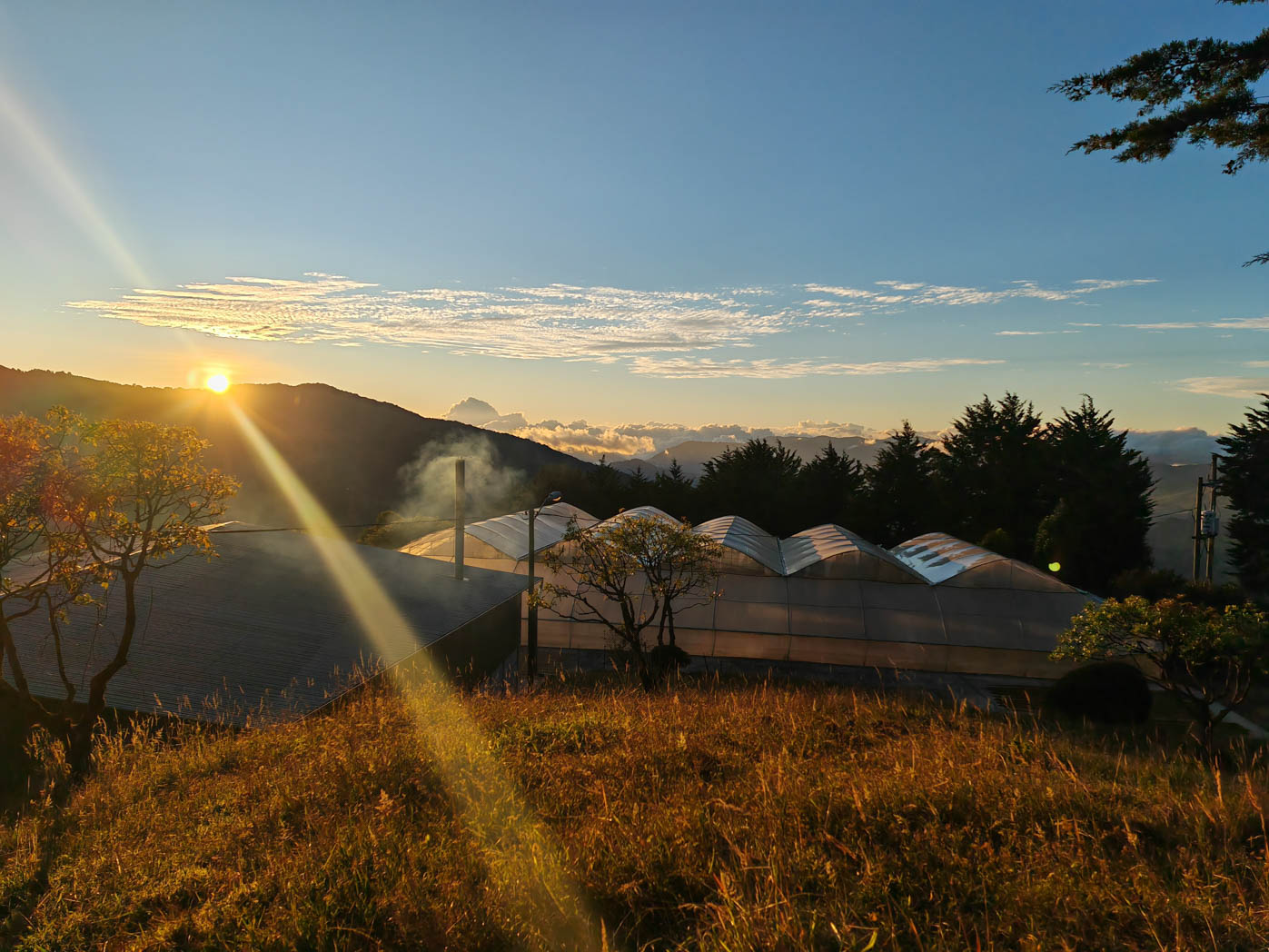
Santa Teresa, his main farm, was acquired by Roger ten years ago and spans an altitude of 1900 to 2050 meters. The total area is 60 hectares, but only 10 hectares are planted with coffee. The majority of the land is protected forest. Roger chose the optimal land to build his wet mill. It is located on a slope that receives gentle afternoon sunlight and where clouds move quickly. The farm is equipped with Penagos pulping machines, raised beds in greenhouses, concrete patios, mechanical dryers, and warehouses. It is a complete operational system.
Roger decided early on to plant different varieties because at the time, not many farmers in Costa Rica were planting coffees other than Catuai and Caturra. He understood the impact of variety on the cup and believed there was a market for more exotic and diverse varieties. Therefore, he cultivates different varieties such as Sudan Rume, Ethiopian varieties, Pacamara, Villalobos, Bourbon, Geisha, SL28, Typica Mejorado, and Catuai.
Roger is constantly innovating, and two years ago, he renovated one of the oldest houses in the community into a beautiful coffee shop. This idea was to promote local consumption of the high-quality coffee from his farm and to allow visitors to the Tarrazú region to experience its standards.
Indeed, the mountain on the eastern side of Santa Maria is called Santa Teresa. This is exactly where this farm and wet mill are located. High altitude, young soil, cool temperatures, gentle sunlight, and a unique microclimate all contribute to the unparalleled quality offered by Santa Teresa 2000.
Roger Urena and his son, Jose Alex, were among the first in the region to be interested in rare exotic varieties like Geisha. They took care to secure seeds and seedlings from excellent sources, and these trees are now established, producing some of the best coffee in the country, and perhaps even the world, in combination with the climate. This year, the farm won 1st place in the washed category of the Cup of Excellence.
Right next to Santa Teresa mountain is a mountainous area called Cedral. This word means "Himalayan Cedar," and there were many cedar trees in that area, which were once cultivated due to the climate. New fertile soil, gentle sunlight, cool climate, abundant rainfall, slow cherry maturation due to high altitude, and young trees combine to produce excellent cup quality.
This is a process that Roger and Jose Alex are particularly skilled at. It is simple, less prone to failure, and complements their unique varieties and terroir. Once the fruit enters the mill, the cherries are processed by their machines, the seeds are removed, and the parchment is mechanically washed. The clean seeds, with very little mucilage remaining, are dried on concrete patios for two days. After that, the coffee is moved to raised drying beds and frequently moved daily in greenhouses for 10 days.
シェア